
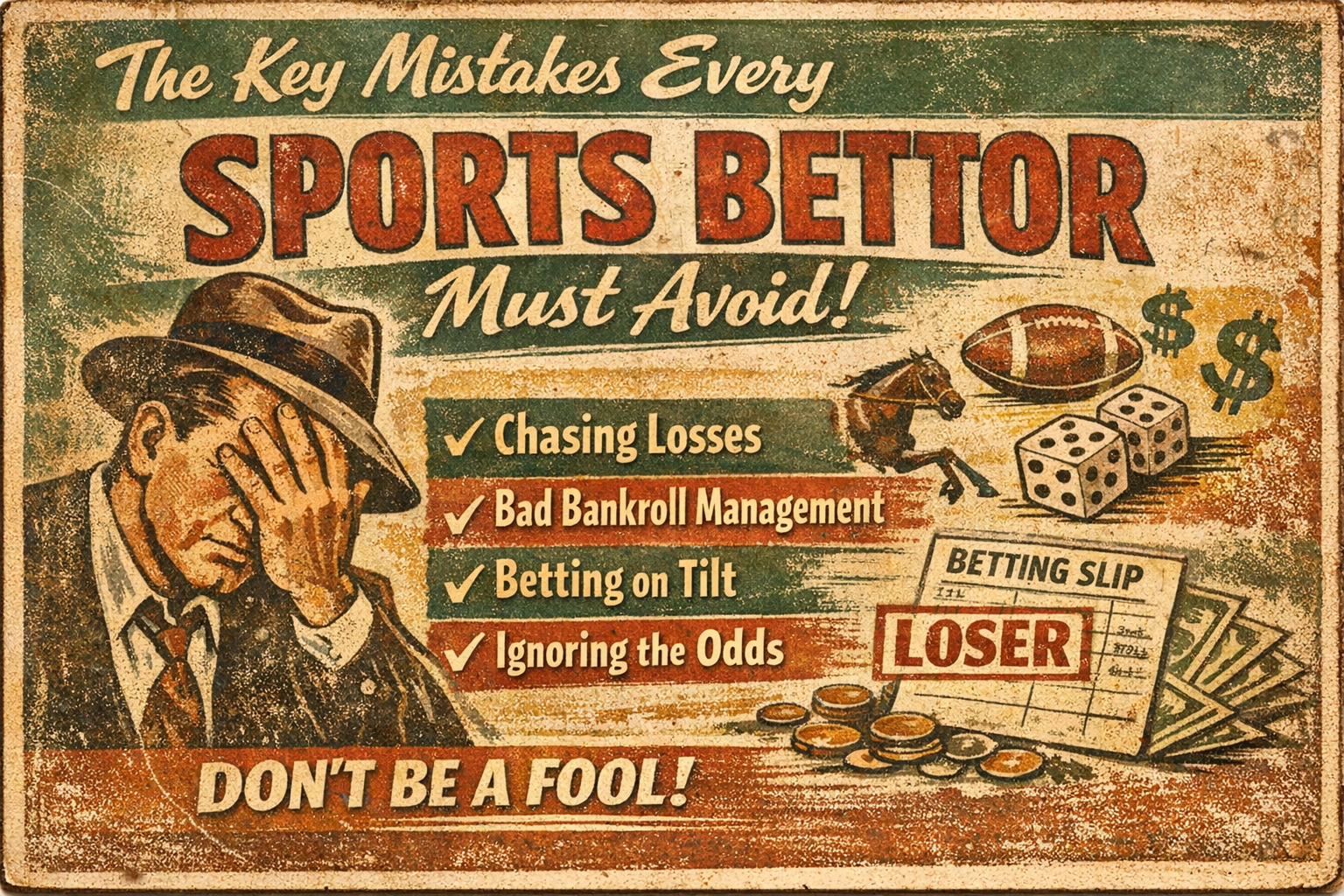
Sports betting mistakes to avoid: bankroll, emotions, value and tracking
Sports betting is meant to be fun, but the fun tends to stop when the money runs out. There are no guarantees in sports betting, but avoiding a few common mistakes can improve your chances of making better decisions and staying in control of your funds. This article is for sports bettors who want to bet more wisely by using simple discipline, basic research, and a repeatable strategy, rather than placing bets on instinct and hoping for the best.
Sports betting can look simple because the process is straightforward. You choose a market, place a wager, and wait for the result. In practice, consistent betting requires more than clicking on an outcome you like. Discipline, research, and strategy matter because they reduce avoidable errors that can drain a bankroll quickly. The sections below explain the most common mistakes to avoid and what to do instead.
What is a bankroll strategy in sports betting, and why does it matter?
A bankroll is the money you set aside specifically for betting. A bankroll strategy is a set of rules for how you fund that bankroll and how much you stake on each bet. This matters because a defined bankroll and clear staking rules reduce the chance that one bad decision wipes out your funds, which helps you keep betting for longer without turning every wager into a crisis.
A practical starting point is to decide how much money from your income you are prepared to use for betting over a fixed period, such as a month. One example is depositing a set amount when you get paid and treating that as the only money you can use for that month. The rule is simple: once it is gone, it is gone. After the bankroll amount is set, the next decision is staking. Staking can be a percentage of your bankroll or a different approach such as flat betting. Flat betting means placing the same wager on each bet, regardless of other factors. A clear bankroll strategy also reduces emotional decision-making because it gives you rules to follow when you are tempted to increase stakes impulsively.
How do emotions lead to bad betting decisions?
Emotional betting is when feelings, rather than logic and research, drive your wagers. Emotional betting can drain an account quickly because it often leads to larger stakes, rushed decisions, and bets that do not match a strategy. The most obvious example is chasing losses, which is betting desperately in the hope of winning back money. Other common emotional triggers include overconfidence, boredom, and impatience.
A practical way to reduce emotional betting is to only place a bet when you genuinely believe the odds of an outcome are better than what the sportsbook is offering. This is a discipline issue as much as a knowledge issue. If a bet does not fit your strategy, does not provide value, or does not fit within your bankroll rules, the correct decision is to step back. A bankroll strategy helps here because it creates boundaries that are harder to ignore when emotions are running high.
What does “value” mean in sports betting odds?
Value in sports betting is when you believe the true probability of an outcome is higher than the probability implied by the bookmaker’s odds. In simple terms, value exists when the price being offered is better than it should be, based on your assessment. The common mistake is betting anyway when the odds are shorter than you expected, simply because you want your research to “count” or because you hope the outcome happens.
Odds are not only a prediction of an outcome. Odds can shift because of betting action and new information. This is important because movement in odds can create situations where you decide not to bet, or where you choose to go against the crowd if you have a clear reason. The key discipline is to separate “I think this will happen” from “the odds make this worth betting”. If the value is not there, stepping away is part of a sound process.
Why overestimating your knowledge is a problem
Watching sports is not enough to become a strong bettor because sportsbooks use analysts, oddsmakers, and advanced modelling systems to set odds. That is the level of competition you face. This means your information and analysis need to go beyond general sports knowledge if you want an edge.
Market size also matters. The bigger the market, the more resources a bookmaker is likely to put into pricing it. A deep knowledge of a major competition like the Premier League may be less useful than detailed knowledge of a lower league, because lower-profile markets may receive less attention and may be less efficiently priced. The practical takeaway is to be realistic about what you know, where your knowledge is genuinely deeper than average, and where the bookmaker is likely to have already priced the obvious information.
How tracking your betting results improves decision-making
Tracking results means recording your bets so you can evaluate what is working and what is not. Having a general “feel” for performance is not enough because memory is selective, especially after big wins or frustrating losses. Tracking makes performance measurable, which allows you to refine your strategy based on evidence rather than instinct.
Tracking can highlight patterns, such as being strong in one market and consistently weak in another. For example, you might find you are good at first goalscorer bets but your under or over bets underperform. That kind of insight lets you streamline your approach and remove inefficiencies. Tracking also adds accountability because knowing you will record each decision can make you more careful before placing a bet. Discipline is a core theme in avoiding mistakes, and tracking is a practical way to reinforce it.
A simple framework for avoiding common sports betting mistakes
A repeatable process helps prevent the most common errors because it replaces impulse with structure. A simple framework based on the points above is:
- Define your bankroll: Choose a fixed amount you can afford to lose over a set period.
- Set staking rules: Use a percentage approach or flat betting, and stick to it.
- Only bet when there is value: If the odds do not offer value, do not force a wager.
- Avoid emotional triggers: Do not chase losses, and do not bet out of boredom or impatience.
- Track every bet: Use records to identify strengths, weaknesses, and recurring mistakes.
This framework is designed to keep betting controlled and intentional, rather than reactive.
What changes next, and how to prepare
As betting markets respond to new information and betting action, odds can change quickly. This makes preparation less about predicting every outcome and more about building habits that hold up under pressure. A clear bankroll strategy, value-based decision-making, and consistent tracking are practical tools that remain useful regardless of sport, market, or short-term results. The goal is not to eliminate losses, because that is not realistic, but to avoid preventable mistakes that make losses worse.
FAQ: sports betting mistakes and smarter betting habits
What is a bankroll in sports betting?
A bankroll is the money you set aside specifically for betting. A bankroll should be separate from essential living expenses and should follow clear rules for how it is used.
What is flat betting?
Flat betting is a staking strategy where you place the same wager amount on every bet, regardless of confidence level or other factors.
What does it mean to chase losses?
Chasing losses is placing bets in a desperate attempt to win back money after losing. Chasing losses is a common form of emotional betting.
What does “value” mean in betting odds?
Value means you believe an outcome is more likely than the bookmaker’s odds imply. A bet has value when the offered odds are better than the probability you estimate.
Why should you track sports betting results?
Tracking results helps you measure what is working and what is not. Tracking also improves accountability because it forces you to review each decision.
Is watching sports enough to become a good bettor?
Watching sports alone is not enough because sportsbooks use analysts, oddsmakers, and advanced modelling systems to set odds. To compete, your analysis needs to go beyond general knowledge.
Key takeaway
Smarter sports betting is usually about avoiding predictable mistakes. Set a clear bankroll and staking strategy, keep emotions out of decisions, only bet when there is value in the odds, stay realistic about your knowledge, and track results so you can improve based on evidence.